Dreaming about extra elbow room, a shop, a barn, or space for horses in Caldwell? Buying an acreage home can open up a whole new lifestyle, but it also comes with a very different set of questions than a standard in-town purchase. If you want to buy with confidence, you need to look beyond the house itself and understand zoning, water, septic, outbuildings, and market options before you commit. Let’s dive in.
Start With Jurisdiction First
One of the most important first steps is figuring out whether the property is inside Caldwell city limits or in unincorporated Canyon County. That one detail can change which rules apply to the land, structures, and possible uses.
Within Caldwell, the city zoning ordinance applies in the city, in annexation-request areas, and in certain county agreement areas. Outside city limits, Canyon County Planning and Zoning generally handles land use and zoning matters. For acreage buyers, that means the same type of property can come with very different standards depending on where it sits.
Know What Zoning Can Mean
If you are buying in unincorporated Canyon County, zoning deserves a close look early in the process. County zoning is designed with different land-use goals in mind, and acreage buyers should not assume every parcel works the same way.
Canyon County’s A zone is intended to protect viable farmland, while the R-R zone is intended for rural lifestyle growth. The county lot-size table shows 40 acres in A, a 2-acre average minimum in R-R, 1 acre in R-1, and 1/2 acre in R-2. Those standards can shape what type of property you are really buying and how flexible it may be over time.
Setbacks Matter More Than Many Buyers Expect
Setback rules affect where buildings can sit on the property. That matters if you are planning to add a shop, expand an existing structure, or simply want to confirm that current improvements appear to fit local standards.
In Canyon County, typical setbacks in agricultural zones are 30 feet front, 10 feet side, and 20 feet rear. In R-R, R-1, and R-2, the standards are 20 feet front, 10 feet side, and 20 feet rear. If a structure is close to a property line, it is worth reviewing permit history and site layout carefully.
Animals and Hobby Uses Need Review
Acreage buyers often picture chickens, horses, or a small hobby setup. The key is not just lot size. The specific zoning and the exact use both matter.
Canyon County’s use matrix distinguishes between smaller parcels and small animal facilities on 5 acres or more, and it allows animals only if the use is not an animal facility or CAFO. If animals are part of your plan, you will want to verify the intended use before moving forward.
Caldwell Accessory Building Rules to Understand
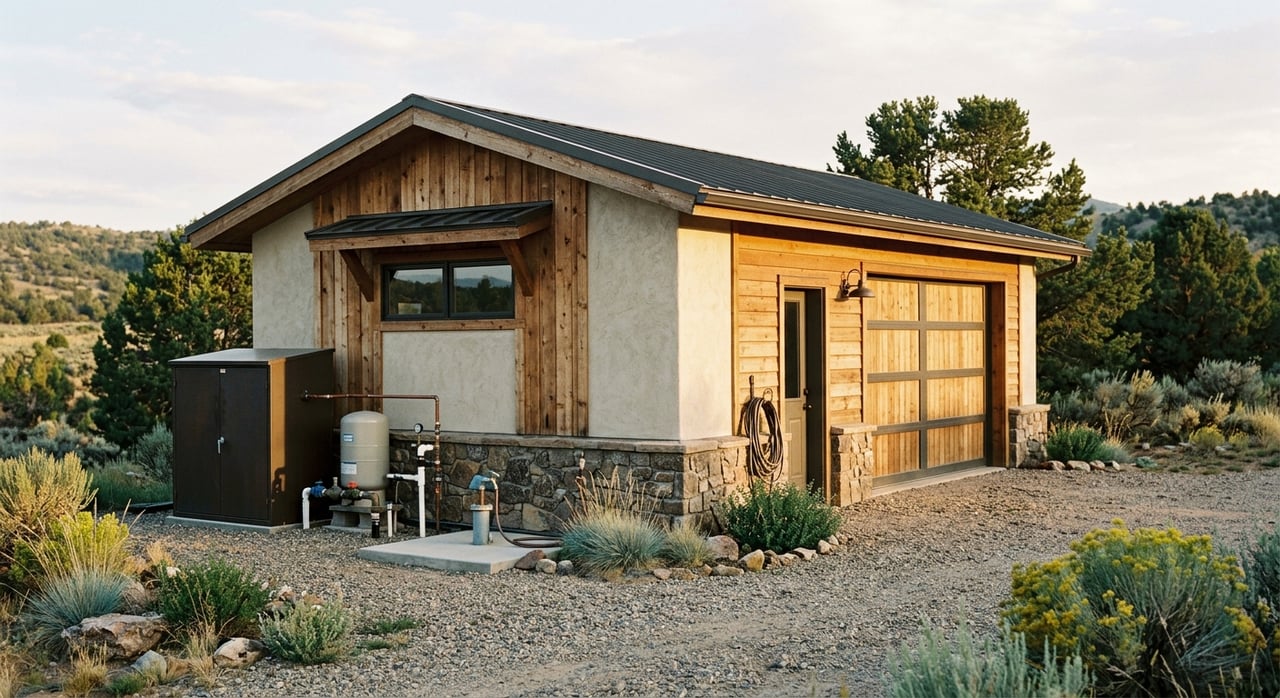
If the property is in Caldwell, outbuildings come with city-specific rules. This is especially important if you are eyeing a property because of an existing shop, detached garage, barn-style structure, or extra building in the backyard.
In Caldwell residential zones, detached accessory structures have size-based setbacks. Buildings under 200 square feet can be 3 feet from an interior side or rear lot line, structures from 200 to 599 square feet need 5 feet, and buildings over 600 square feet are limited to the rear yard and must meet district setbacks.
Height limits also apply. Caldwell caps detached accessory building heights at 22 feet in R-1, R-2, and R-3, and 33 feet in RS-1 and RS-2. Those limits can matter if you want a larger shop, storage structure, or barn-style building.
Outbuildings Are Not Automatically Living Space
This is a big one for acreage buyers. In Caldwell, detached accessory buildings are considered subordinate uses and generally cannot be used for dwelling purposes unless they are approved accessory dwelling units.
That means a shop, barn, or detached structure should not be assumed to be legal living space just because it has power, finishes, or a bathroom. If an extra structure is a major part of the property’s value to you, permit and use verification should be part of your due diligence.
Water and Irrigation Can Shape Daily Life
One of the biggest differences between a suburban home and an acreage property is how water reaches the land. For many acreage buyers, irrigation is just as important as the house itself.
Caldwell’s municipal irrigation district says the season usually runs about April 15 to 30 through October 1 to 15. The city also notes there may be low pressure during start-up and maintenance periods. If your goals include pasture, landscaping, or a large garden, it helps to understand how that schedule affects the property.
Not Every Nearby Area Works the Same Way
If you are comparing Caldwell with nearby acreage options, irrigation systems can vary by area. Nampa reports irrigation districts begin releasing water in early to mid-April, with city customers usually seeing full pressure by early May.
Middleton works differently. The city does not provide irrigation water there, and irrigation comes through Middleton Irrigation Association and Middleton Mill Ditch. The association also says water is not guaranteed and that full assessments still must be paid even in a poor water year.
Lateral Maintenance May Fall on the Owner
Some buyers are surprised to learn that irrigation responsibility can extend beyond paying an assessment. Middleton’s irrigation association notes that laterals can carry water rights to properties farther from the main canal, and owners on unincorporated laterals are responsible for cleaning, maintenance, and repairs.
That detail is a useful reminder for any acreage purchase. You will want to understand not just whether irrigation exists, but also who maintains the system and what the owner is expected to handle.
Wells and Septic Need Extra Attention
Many acreage properties rely on private systems instead of city utilities. That makes well and septic due diligence especially important.
If the property uses a private well, Idaho’s water agency says wells should be drilled by licensed well drillers. The agency also states that irrigation wells need approved water rights before approvals are issued. For buyers, that means the well setup and its intended use deserve careful review.
Private well ownership also comes with testing responsibility. Local health guidance says private wells can be contaminated by septic systems, farm animals, farm chemicals, and naturally occurring chemicals, so testing is the owner’s responsibility. A water test can give you a clearer picture of what you are buying.
Septic Approval Is a Key Piece
If the property is on septic, Southwest District Health is the local authority to know. It permits septic tanks and drainfields, and a septic permit is usually required before a county building permit.
The process also includes an on-site evaluation with a 10-foot test hole. Whether you are buying an existing acreage home or thinking about future additions, septic capacity and permit history can affect your options.
What Inspections Should Focus On
With acreage, inspections are often less about cosmetic details and more about systems, land, and legal use. A beautiful property can still have major questions hiding behind the scenes.
Common due-diligence items include well flow, water quality, septic age and drainfield condition, irrigation assessments or easements, driveway and road access, floodplain exposure, and whether existing outbuildings were permitted. Canyon County also has flood hazard overlay standards for development in flood-prone areas, which can matter on some parcels.
Existing Structures Deserve a Closer Look
On acreage properties, extra structures can be a major value driver. They can also be a source of surprise if they were built without proper approvals or are being used in ways that do not match current rules.
In Caldwell, detached accessory uses cannot be used as dwellings except approved ADUs. The city also limits temporary camping trailers, tents, recreational vehicles, and similar structures to 14 days within a 6-month period unless they are in a bona fide campground or RV park. If flexible living arrangements or guest setups are part of your plan, it is smart to verify what is actually allowed.
Caldwell Acreage Pricing in Context
If you are comparing acreage options around the western Treasure Valley, Caldwell stands out for offering a broad range of entry points. As of March 2026, Redfin shows median sale prices of $405,000 in Caldwell, $418,000 in Nampa, and $430,000 in Middleton.
That citywide snapshot places Caldwell slightly lower than Nampa and Middleton. For buyers who want land without stretching into the highest surrounding price bands, that may make Caldwell worth a closer look.
Active Acreage Listings Show Broad Range
Current active listings also suggest Caldwell offers a wider lower-entry acreage selection. Zillow’s on-acreage pages show 108 listings in Caldwell, 103 in Nampa, and 42 in Middleton, though those pages include both houses and land-only parcels, so the data is best viewed as directional.
In Caldwell, active acreage listings currently range from about $225,000 for a 5.04-acre lot to $1.995 million for a 42.61-acre lot. Active acreage homes include examples around $525,000, $569,999, $800,000, and $1.128 million.
By comparison, Nampa’s active on-acreage listings include examples at $374,900, $429,000, $585,000, $739,900, $789,000, and $1.5249 million. Middleton’s active on-acreage listings begin around $432,000 and $569,000, with additional examples at $675,000, $775,000, $1.45 million, $1.5749 million, and $2.15 million.
Taken together, the current listing snapshot suggests Caldwell offers the broadest lower-entry acreage selection, Nampa sits near the middle, and Middleton skews toward fewer and higher-priced acreage options. That is not a formal closed-sale study, but it is a useful market snapshot for buyers weighing where to focus their search.
A Smart Caldwell Acreage Buying Checklist
Before you move forward on an acreage home, make sure you have answers to the questions that matter most:
- Is the property inside Caldwell city limits or in unincorporated Canyon County?
- What is the current zoning, and what uses are permitted?
- Are horses, chickens, or hobby-livestock plans allowed under the current rules?
- Were the home, shop, barn, and other outbuildings properly permitted?
- Does the property have irrigation, and who maintains the system?
- Is there a private well, and has flow and water quality been tested?
- Is the property on septic, and what is the condition and permit history?
- Are there easements, floodplain concerns, or access issues to review?
- Do any extra structures appear to be used as living space, and is that approved?
Buying acreage in Caldwell can be incredibly rewarding when the property fits your lifestyle and the details check out. The key is to approach it with clear eyes, local knowledge, and a strong due-diligence plan so you know exactly what you are buying.
If you are exploring acreage, ranch, or equestrian property in Caldwell and want practical guidance tailored to your goals, The Shriner Group can help you evaluate the land, the use, and the long-term fit.
FAQs
What should you check first when buying an acreage home in Caldwell?
- First, confirm whether the property is inside Caldwell city limits or in unincorporated Canyon County, because that determines which zoning and land-use rules apply.
Does acreage zoning in Canyon County allow horses or chickens?
- It depends on the specific zoning and the exact use, because county rules distinguish between parcel sizes and certain animal-related uses.
Can a shop or barn be used as living space on a Caldwell acreage property?
- In Caldwell, detached accessory buildings generally cannot be used for dwelling purposes unless they are approved accessory dwelling units.
Why is irrigation important for acreage homes in Caldwell?
- Irrigation affects how you use the land for pasture, landscaping, or gardens, and the season, pressure, maintenance, and assessments can vary by area and system.
What well and septic issues should acreage buyers review in Canyon County?
- You should review well construction and water testing, along with septic permits, system condition, and whether the property has completed the required local evaluation process.
Is Caldwell more affordable than Nampa or Middleton for acreage buyers?
- Current market snapshots suggest Caldwell has a slightly lower citywide median sale price and a broader lower-entry acreage selection than Nampa or Middleton.