Ready for more room but not sure what “small acreage” in Star really means? If you are moving from a subdivision to a larger parcel, the change can feel exciting and a little more complex at the same time. The good news is that with the right expectations, you can make a confident move that fits your lifestyle, your plans for the land, and your long-term goals. Let’s dive in.
Small Acreage Means More Than a Bigger Yard
In Star, small acreage is usually tied to rural-residential land, which is treated differently from standard subdivision property. The city’s future land-use map identifies rural residential areas at about 1 unit per 2 acres to 1 unit per 5 acres, and the rural-residential zoning district sets a two-acre minimum parcel size.
That matters because this type of property is designed to preserve a rural feel rather than recreate subdivision living on a larger lot. In other words, you are not just buying more land. You are often stepping into a different way of using and maintaining property.
What Rural-Residential Living Looks Like
Star’s code is clear that rural-residential areas are not amenity-based communities. These areas may be farther from goods and services than suburban neighborhoods, and they may not include features many buyers are used to seeing in subdivisions.
Depending on the property, you may not have sidewalks, bike paths, streetlights, or planned parks and recreation facilities nearby. Sidewalks may not be required in agricultural, rural residential, and R-1 districts, which can make the setting feel more open and less structured than a typical neighborhood.
That is part of the appeal for many buyers. If you want privacy, open space, and a more rural setting, small acreage in Star can offer exactly that. It just helps to go in knowing the experience will likely be different from a master-planned subdivision.
Land Use Can Be More Flexible
One of the biggest reasons buyers look at acreage is the flexibility of the land itself. Star’s rural-residential standards contemplate uses such as agriculture, viticulture, equestrian use, residential use, native open space, and small-scale farmland.
That creates opportunities for buyers who want room for horses, a pasture, a garden, or simply more separation from neighbors. The city code also notes that manicured homesite areas should be minimal and subordinate to the surrounding open rural ground, which reinforces the rural character these areas are meant to keep.
Expect a Different Ownership Model
Moving to acreage is often less about lawn size and more about responsibility. In a subdivision, many site features and neighborhood improvements are already built into the community experience. On small acreage, you may take on more of that responsibility yourself.
That can include things like fencing, irrigation, outdoor upkeep, and land improvements that support hobby-farm or equestrian use. If your goal is a lifestyle property, this can be a great fit. If your goal is simply more space with the same level of convenience as a subdivision, it is worth looking closely before you buy.
Utilities May Be Less Simple Than You Expect
A common assumption is that acreage automatically means a private well and septic system. In Star, that is not always the case. The details can vary by parcel, location, and proximity to available services.
Star code says that any building within 300 feet of Star Sewer & Water District services must connect to that system at annexation or development, including remodels. At the same time, Star’s subdivision rules allow proposed parcels over one acre to use an individual septic system when approvals are in place from both the health district and Star Sewer & Water District.
The takeaway is simple: do not assume. You will want to confirm early whether a property is served by public water and sewer, may require connection, or may qualify for an individual system.
Local Utility Providers to Know
Star’s resident utilities page lists several of the main local providers buyers will likely encounter:
- Idaho Power
- Intermountain Gas
- Star Sewer & Water District
- Republic Services for trash and recycling
On acreage, it is smart to verify not just who the providers are, but also how service reaches the property and what ongoing maintenance may still fall to you.
Septic Due Diligence Matters
If a property uses or may use septic, the process deserves extra attention. In Ada County, Central District Health handles septic permitting and land development review.
Its Ada and Boise septic application instructions say buyers should expect a site evaluation, test holes, and a detailed plot plan as part of the permit process. That means septic is not just a checkbox. The land itself has to support the system, and approvals matter.
If you are buying for future improvements, this becomes even more important. A parcel that looks ideal on the surface may still need careful review before your plans can move forward.
Private Wells Require Ongoing Care
If a property has a private well, that also comes with owner responsibility. Idaho DEQ says private-well owners are responsible for testing their own drinking water, and it recommends annual nitrate and coliform testing.
Idaho law also requires a drilling permit before drilling a well, and wells must be built by a licensed driller. For buyers, this means the water source is not just a feature on the listing sheet. It is an ongoing part of property ownership that should be understood before closing.
Irrigation Can Be a Big Part of the Decision
On small acreage, irrigation can be just as important as water and septic. Star’s code requires underground pressurized irrigation in each development, and the irrigation system must be separate from potable water unless the district grants a waiver.
For you as a buyer, that means irrigation rights and irrigation-system maintenance deserve real attention during due diligence. If you plan to keep pasture, landscape a large area, or support animals, irrigation is not a side issue. It is central to how the property functions.
Road Access Deserves a Closer Look
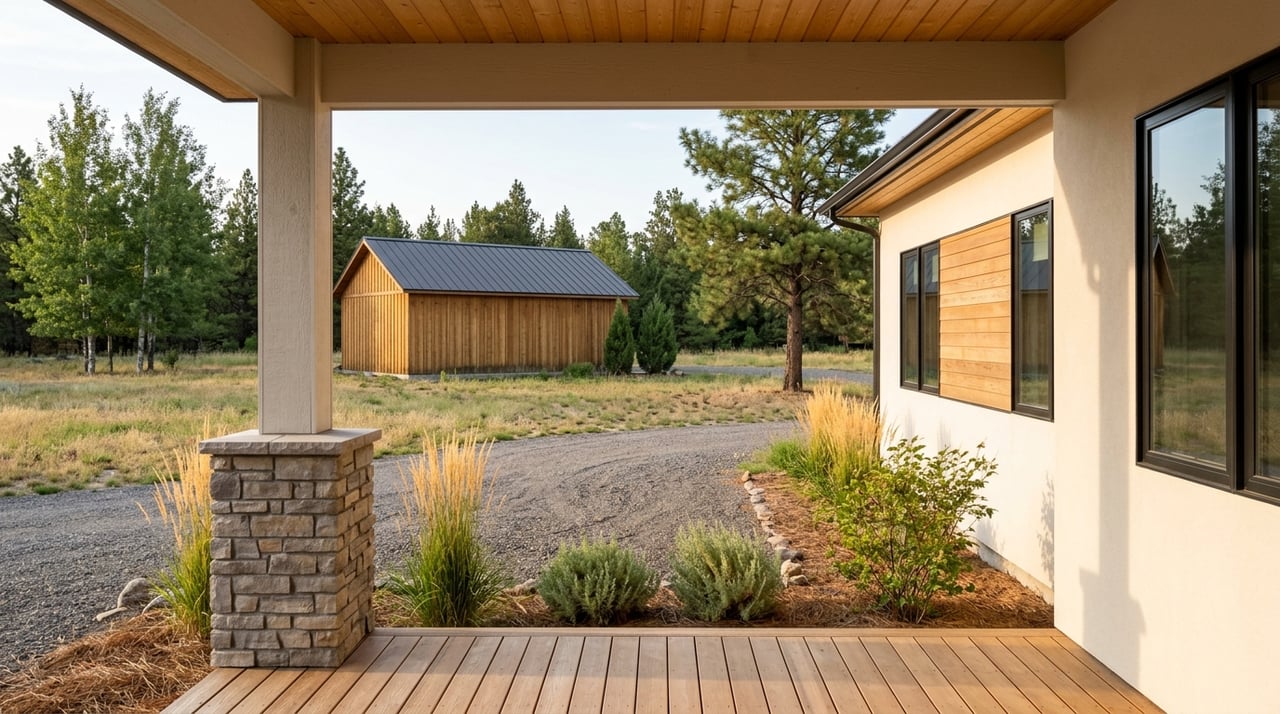
Access can be one of the biggest lifestyle differences when you move from a subdivision to acreage. If a parcel sits on a private road or at the end of a long private driveway, you will want to understand both legal access and maintenance responsibility.
Ada County’s private-road code requires a recorded perpetual access easement, a maintenance contract that names who is responsible for repairs and funding, and approval of the road connection by ACHD or ITD depending on the adjoining highway. Those are important details that can affect both day-to-day convenience and future resale.
Star also notes that private streets may be permitted for newly subdivided or split property, and utility easements may be required. A property can look peaceful and tucked away, but you still need to know exactly how access works on paper.
Surrounding Land Use Matters Too
When buyers shop for acreage, they often focus on the parcel itself. In Star, the surrounding land-use map can matter just as much. The city’s future land-use map includes a special transition overlay area, and the rural-residential transition standards allow smaller lots near those transitions.
In practical terms, nearby vacant land may not stay rural forever. If your decision is tied to privacy, views, or a low-density setting, it is wise to look beyond current conditions and study what the area is planned to become.
Fire Service and District Boundaries
Acreage buyers should also verify service and district information before they buy. Star lists the Star Fire Protection District as the local fire provider.
The city also lists both West Ada School District and Middleton School District as serving Star. District boundaries can vary by property, so if a boundary matters to your move, it is worth confirming the specific assignment for the parcel you are considering.
A Simple Checklist Before You Buy
If you are thinking about moving from a subdivision to small acreage in Star, here are some of the most important questions to answer early:
- What is the current zoning and future land-use designation?
- Is the parcel within 300 feet of Star Sewer & Water District service?
- Will the property use public utilities, septic, a private well, or some combination?
- Is there an irrigation system, and how is it maintained?
- Is access from a public road, private road, or easement?
- Who is responsible for road maintenance and repairs?
- Are there utility easements or development constraints?
- What are the surrounding properties planned for in the future?
These questions can help you avoid surprises and narrow in on properties that truly match your lifestyle goals.
Why Guidance Matters on Acreage Purchases
Buying acreage in Star can be incredibly rewarding, but it usually takes a little more investigation than buying in a standard subdivision. You are evaluating not just the home, but also the land, the services, the access, and the long-term context around the property.
That is why a local, lifestyle-focused approach matters. If you want a move that gives you more freedom, more space, and the right setup for how you actually plan to live, the details are worth getting right from the start.
If you are considering a move from subdivision living to small acreage in Star, The Shriner Group can help you evaluate the land, the lifestyle, and the practical details so you can move forward with confidence.
FAQs
What does small acreage in Star usually mean?
- In Star, small acreage often refers to rural-residential property, where the future land-use map shows about 1 unit per 2 acres to 1 unit per 5 acres and the zoning district has a two-acre minimum parcel size.
What lifestyle changes should you expect when moving from a subdivision to acreage in Star?
- You can expect more privacy and open space, but also more responsibility for upkeep, fencing, irrigation, and improvements related to uses like pasture, horses, or small-scale farming.
Do small acreage properties in Star always have well and septic?
- No. Star code says properties within 300 feet of Star Sewer & Water District services must connect at annexation or development, including remodels, while some parcels over one acre may be approved for individual septic systems.
What should you check about septic on acreage property in Ada County?
- You should confirm permitting and site suitability, because Central District Health says septic applications may require a site evaluation, test holes, and a detailed plot plan.
Why is irrigation important when buying acreage in Star?
- Irrigation matters because Star requires underground pressurized irrigation in each development, separate from potable water unless waived, so irrigation setup and maintenance can directly affect how usable the land is.
What should you verify about private-road access for Star acreage property?
- You should verify recorded access easements, road-maintenance agreements, and which authority approved the road connection, since Ada County requires those items for private-road access.
Why does future land use matter when buying acreage in Star?
- Future land use matters because nearby vacant land may change over time, and Star’s planning documents include transition areas where smaller lots may be allowed near rural-residential property.